
Bellevue, WA · King County
Ceiling Water Damage: Leaks, Stains and Sagging
Water dripping from the ceiling, a brown stain spreading, or a bulge that wasn’t there yesterday? Get everyone out from under it first. Then stop the water and call (425) 307-0286 to reach a local restoration company. That company finds how far the water spread, dries what can be saved and documents it for your insurance.
Call (425) 307-0286.
What is ceiling water damage?
Ceiling water damage is water that gets into the ceiling from above, through a leak, a drain pan or the roof. It soaks the drywall and insulation, and it can stain, bubble or sag the ceiling below.
Water inside a ceiling can stay hidden for days, so a small stain can mean a larger wet area.
Ceiling leaking or sagging? Do these 5 things first
- Get out from under it. Move people, pets and anything valuable out of the room below. Don’t stand on furniture under a bulge, and don’t push on it.
- Turn off the power. Turn off the power to that room at the breaker if water is near a light, ceiling fan or outlet. Don’t touch a wet switch.
- Stop the water. Close the valve behind an upstairs toilet, or the cold-water valve on top of the water heater. Turn the AC off at the thermostat. If you can’t find the source, close your home’s main shutoff.
- Catch the drips. Catch the drips with buckets or a tarp, away from the sagging spot.
- Take photos, then call. Get the ceiling, the floor below and the source if you can see it. Then call (425) 307-0286.
Can a ceiling collapse from a water leak?
Yes. Ceiling drywall soaked from above gets soft and heavy, and a bulge can be holding a pool of water. It can come down without warning.
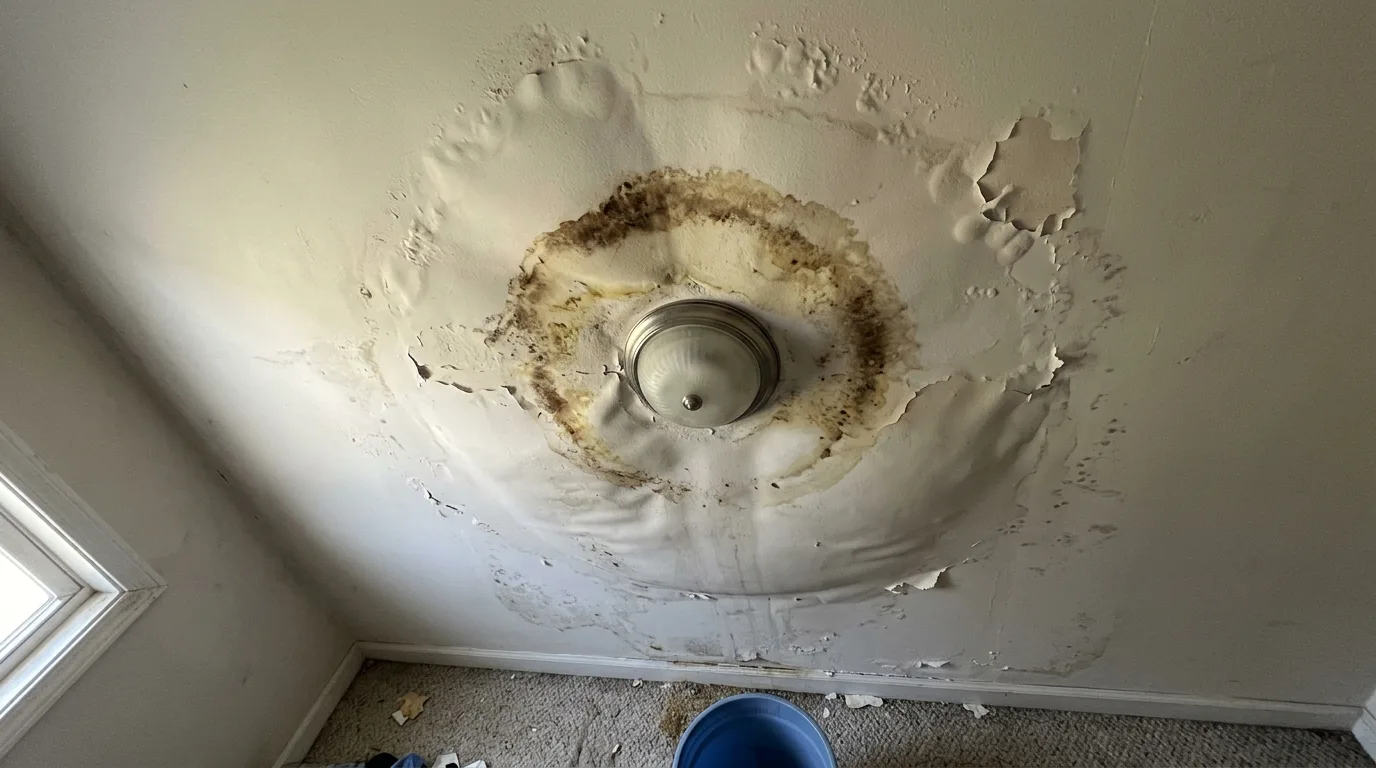
Signs the ceiling is holding water:
- a bulge or sag in the drywall
- a spreading brown ring, or a stain that feels soft
- peeling or bubbling paint
- drips from a seam, a light fixture or an AC vent
Don’t poke a hole in a sagging ceiling yourself. Keep the room clear and let the restoration company handle it. Wet drywall that is sagging or soaked through gets replaced, not dried.
Water is dripping around a ceiling light. How bad is it?
Treat it as urgent. Turn off that room’s breaker and leave the light off. Have an electrician check the fixture before you use it again.
A light in a closet or hallway often sits right under the attic. If the attic water heater is sitting in a pool of water, close the cold-water valve on top of the tank. Then turn off its gas valve or its breaker. Smell gas? Leave the house. From a safe distance, call 911 or Atmos Energy at 866-322-8667 (City of Bellevue). Our water heater and AC leak page covers what to do with the heater itself.
Where is the water coming from?
- Upstairs bathroom leak. In two-story homes, a leak at an upstairs tub, shower or toilet shows up as a stain in the room below. A toilet overflow can quickly soak the ceiling below.
- AC condensate drain line. An attic air handler drips into a pan that drains outside. When the drain line clogs, the pan overflows onto the ceiling.
- Attic water heater. A failed tank or fitting leaks straight down into the ceiling and the rooms below.
- Roof leak. Storms can damage shingles and flashing. A stain that grows after rain points to the roof.
- A pipe in the ceiling. A supply line running between floors can leak for weeks. That kind of hidden leak may show only as a faint stain at first.
Finding the source is called leak detection. A plumber, HVAC technician or roofer finds and fixes the source. A restoration company uses a moisture meter and often a thermal camera to map how far the water spread.
Which trade fixes each cause?
- Plumber: toilets, tubs, showers, supply lines and water heaters.
- HVAC technician: the AC drain line, pan and air handler.
- Roofer: shingles, flashing and roof vents. Replacing a roof needs a permit in Bellevue (City of Bellevue, “When is a Permit Required?”).
Why is my AC leaking water through the ceiling?
The most common cause is a clogged condensate drain line, which makes the drain pan overflow (PickHVAC, 2025). Turn the AC off at the thermostat to stop more water.
Your AC pulls water out of the air as it cools. That water drips into a pan and runs out a small drain line. When algae or dirt clogs the line, the pan fills and spills onto the ceiling below. These leaks are most likely in summer, when the AC runs the most.
Other causes of an AC leak
Other causes of an AC leak are listed below:
- a dirty air filter that lets the coil freeze, then melt
- a rusted or cracked drain pan
- a unit that isn’t level, or a drain line without enough slope
- a loose or disconnected drain line
- a failed condensate pump
- condensation forming on ducts or vents
Troubleshooting an AC leak
My ceiling only leaks when the AC runs, even after a new air handler. Why?
If the air handler is new, look at what didn’t change: the drain line, the pan and the ducts. A drain line without enough slope can hold water. Ducts that sweat in a hot attic can drip onto the ceiling (PickHVAC, 2025). Ask an HVAC technician to check the drain slope and the duct insulation.
Water keeps dripping from a ceiling AC vent. Where do I look first?
Start at the vent itself. Drops on the grille often mean condensation is forming on the vent or the duct behind it (PickHVAC, 2025). If water runs steadily, check the air handler and drain pan in the attic. Water coming through vents can be a sign of an AC leak above (PickHVAC, 2025).
My brand-new AC is leaking onto the garage ceiling. Why?
Poor installation is a common reason a new system leaks (PickHVAC, 2025). A unit that isn’t level, or a drain line without enough slope, lets water spill out. Call the installer back first.
Installing or replacing an AC system needs a permit in Bellevue (City of Bellevue, “When is a Permit Required?”). Ask the installer for the permit and inspection record.
My AC is leaking through the ceiling. Can it wait a few days?
A few drops onto a pan can wait for a technician. Water reaching the ceiling drywall shouldn’t wait. Turn the AC off today and get the drain cleared.
Days of dripping soak the insulation and drywall and raise the risk of mold. The EPA advises drying wet materials within 24 to 48 hours to prevent mold growth. Slow leaks can also hurt an insurance claim.
Ceiling stain under the air handler? Call (425) 307-0286 for a moisture check.
More on AC drain leaks, float switches and insurance: water heater and AC leaks.
Should wet ceiling drywall be replaced, or can it dry and be painted?
Ceiling drywall can often dry in place if it isn’t swollen and the seams are intact. If it’s swollen or the seams have split, the EPA says to remove and replace it (EPA mold remediation guide, Table 1). A sagging ceiling is usually replaced too.
What’s above the drywall matters too. Wet insulation in the attic or between floors usually comes out. The EPA says wet fiberglass and cellulose insulation should be thrown out and replaced. Drop-ceiling tiles that got wet are also replaced (EPA, Table 1).
The type of water matters. Clean water from a supply line is easier to save. Water from a toilet bowl, or dirty water that sat, may mean the drywall comes out. Our guide to water damage categories explains why.
Don’t paint over a stain until the moisture readings say the ceiling is dry. Paint can hide a wet spot that’s still growing. Ask to see the readings first. How long that takes: drying time.
How do you repair a water-damaged ceiling?
Fix the source, dry the ceiling, then repair what can’t be saved. A common mistake is patching a ceiling that’s still wet.
- Fix the source. The plumber, HVAC technician or roofer goes first.
- Measure and dry. Moisture readings show how far the water spread. Fans and dehumidifiers dry what can be saved.
- Remove what’s ruined. Wet insulation and soft or sagging drywall come out.
- Replace and finish. New insulation and drywall go up. The seams are taped and mudded, and the texture is matched.
- Prime and paint. A stain-blocking primer keeps old stains from bleeding through.
In older homes, ask about asbestos before anyone cuts into a textured ceiling. The EPA lists textured paint and patching compounds used on walls and ceilings among products that may contain asbestos. A trained, accredited professional should take samples (EPA).
The rebuild itself, permits and matching finishes are covered on our water damage repair page.
What does it cost to repair a ceiling with water damage?
The total depends on how much drywall and insulation come out, and whether the texture and paint have to be matched across the whole ceiling. Drying adds to the bill if the ceiling is still wet. Fixing the source is a separate cost. See water damage restoration cost for price ranges and how drying is billed.
Who do I call for water damage in my ceiling?
Call two people: the trade that fixes the source, and a restoration company that dries the ceiling. Fixing the leak doesn’t dry the drywall and insulation it soaked.
Call (425) 307-0286 to reach a local restoration company. Ask for a moisture check, dated photos and daily readings you can share with your adjuster.
Will insurance pay for ceiling water damage?
Usually, if the leak was sudden and accidental, like a burst supply line or a toilet overflow.
The part that failed, like the water heater or the AC drain, usually isn’t covered. Roof leaks depend on what caused them and your policy. Your adjuster decides what’s covered.
Leak came from the unit or home above you? Tell your landlord, HOA or neighbor in writing right away. Our guide to who pays for water damage covers renters, condos and neighbors.
Frequently asked questions
Is a sagging ceiling dangerous?
Yes. Ceiling drywall soaked from above gets soft and heavy, and a bulge can be holding a pool of water. It can come down without warning, so keep the room clear and let the restoration company handle it.
Should I turn off the power if water is near a light?
Yes. Turn off that room’s breaker if water is near a light, ceiling fan or outlet, and leave the light off. Have an electrician check the fixture before you use it again.
What usually causes a ceiling leak?
Can wet ceiling drywall dry and be painted?
Ceiling drywall can often dry in place if it isn’t swollen and the seams are intact. If it’s swollen or the seams have split, the EPA says to remove and replace it. Don’t paint over a stain until the readings say the ceiling is dry.
Does insurance pay for a ceiling leak?
Usually, if the leak was sudden and accidental, like a burst supply line or a toilet overflow.
Ceiling leaking? Call (425) 307-0286
Clear the room, turn off the power and the water, take photos, then call.